Persistent breathlessness, a falling oxygen-saturation reading, or an alarm does not always mean the device has failed, but it requires a structured response. You will learn when to call 112, how to check the person and equipment safely, and how to choose a clinically appropriate backup plan.
Key takeaways
- Call 112 for blue lips, confusion, chest pain, fainting, or severe breathlessness.
- Do not increase oxygen flow without the prescribed setting or clinical advice.
- Check the cannula, tubing, battery, alarm, filter, and power connection.
- Choose backup oxygen by prescribed flow, runtime, and available power.
Recognise an emergency before troubleshooting the device
Severe breathlessness at rest, blue or grey lips or face, new confusion, fainting, chest pain, unusual drowsiness, inability to speak full sentences, or rapidly worsening symptoms make portable oxygen concentrator problems an emergency. Call 112 or go to an emergency department.
Do not drive while severely breathless, and do not spend time changing settings during a crisis.
For less severe symptoms, check the immediate causes in this order:
- Sit upright. Confirm the portable oxygen concentrator for breathing support is switched on, then check the battery level and alarm display.
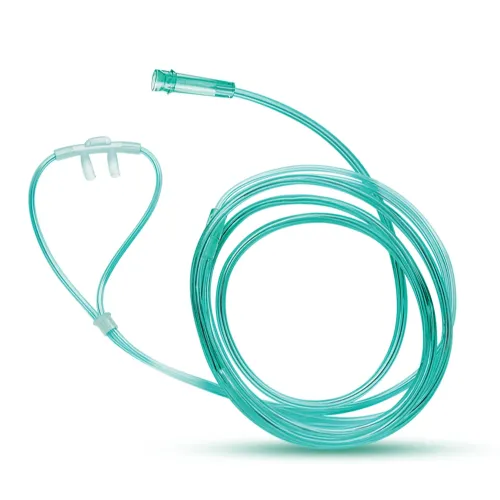
- Reposition the nasal cannula. Inspect the tubing for kinks, disconnection, water, or a damaged cannula.
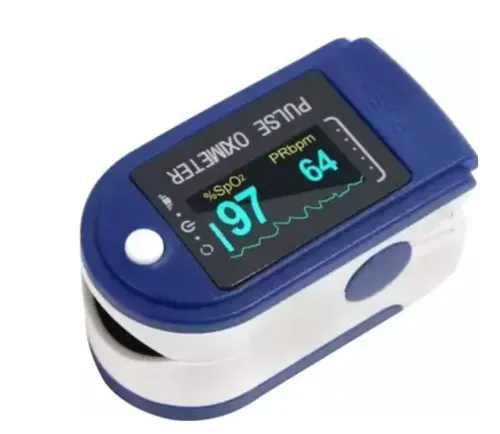
- Repeat the SpO2 reading. Warm the finger, remove nail polish, check that the probe contacts the skin properly, keep the hand still, and wait for a stable number.
- Question a suspicious reading before assuming inadequate oxygen delivery. Cold hands, movement, poor circulation, and poor probe contact can produce a false low result.
- Follow the prescribed target, not a guessed setting. A persistent low reading or a result below your clinician’s target needs medical advice; do not repeatedly increase oxygen while troubleshooting.
A low number with cold fingers can improve after warming and resting. A low number that remains low, especially with worsening symptoms, can reflect inadequate oxygen delivery or a serious illness rather than a device fault.
Check whether the setting matches the person’s actual oxygen need
A setting that works while sitting can fail during walking, rapid breathing, mouth breathing, or sleep because the device may not deliver oxygen in the way that person needs. A portable oxygen concentrator for breathing support may use pulse-dose delivery: it detects an inhalation and releases a bolus.
Continuous flow supplies oxygen throughout the prescribed time. If the sensor misses shallow, fast, or mouth breathing, you may receive too little oxygen.
Pulse-dose numbers are not litres per minute, and a higher pulse number does not equal a higher continuous-flow rate.
| Mode | How oxygen is delivered | Main limitation |
|---|---|---|
| Pulse-dose | A bolus follows a detected inhalation | Missed breaths can reduce delivery |
| Continuous flow | Oxygen flows throughout the prescribed time | Requires a model that supports the prescribed flow |
Check the model manual or specification sheet for:
- Pulse-dose versus continuous-flow capability and flow range
- Maximum oxygen concentration and altitude limit
- Battery runtime under the selected setting
- Alarm conditions and sensor requirements
A single resting SpO2 reading cannot prove adequate oxygen during exertion or sleep. Do not raise the setting because of breathlessness or assume the device is meeting demand; the prescribing doctor or respiratory therapist must confirm the flow and target.
Oxygen does not treat carbon-dioxide retention, severe airway obstruction, or the need for CPAP or BiPAP. Sleep-related desaturation may require assessment for a different interface or ventilatory-support device, not simply a higher setting for portable oxygen concentrator home care.
Find common equipment faults and make home use safer
Check the power adapter is firmly connected, the battery is charged, and the alarm display shows the correct fault. Inspect the air intake and exhaust for dust, clothing, or furniture; blocked vents can stop delivery and overheat the enclosure. Move the unit to a dry, cool, well-ventilated place with clearance around every vent.
- Inspect the oxygen path: tighten loose fittings, straighten kinked tubing, remove condensation or water, and replace a cracked or damaged cannula. Do not use tubing or cannulas beyond the replacement interval in the model’s manual.
- Check filters for dirt and overdue replacement. Clean or replace them only as the manufacturer instructs; the same manual controls battery care, charging, approved power adapters, and any extension arrangement.
- Stop using an overheating unit, repeated-alarm unit, or unit that loses power after these checks. Do not open the case, modify the device, block vents, or fit an unapproved adapter. Arrange servicing.
Chennai heat, dust, humidity, poor ventilation, and unstable power increase portable oxygen concentrator problems. Keep the device dry and cool, and keep a tested backup ready. Oxygen fire rules are strict: maintain at least 5 feet (1.5 metres) from cigarettes, candles, gas stoves, sparks, and flames; avoid petroleum jelly, oil, grease, and flammable aerosols.
Control tubing to prevent trips. Family members need the alarm response and backup procedure. Keep the prescription, model, serial number, supplier contact, and emergency numbers together for safer portable oxygen concentrator home care.
Choose a backup that matches flow, runtime, and power conditions
A backup must match the prescribed flow, the hours away from electricity, and the user’s ability to handle it. A stationary oxygen concentrator suits extended home use and continuous-flow needs, but it stops during a power cut unless connected to a suitable backup system.
| Option | Power dependence | Refill and runtime | Portability and flow |
|---|---|---|---|
| Stationary oxygen concentrator | Needs mains electricity | No cylinder refill; runs while powered | Poor portability; supports the model’s specified continuous-flow range |
| Portable oxygen cylinder | No electricity while in use | Finite contents; refill or exchange required | Travel-friendly; regulator must deliver the prescribed flow |
| Larger medical oxygen cylinder | No electricity while in use | More reserve, but still needs verified refill access | Heavy and less portable; requires secure storage and handling |
Cylinder runtime depends on cylinder size, pressure, and prescribed flow. Do not rely on an unverified estimate during an outage; a clinician or supplier must test the cylinder, regulator, and cannula at the actual flow for the expected hours away from power.
Before choosing, confirm:
- The prescription and whether oxygen is pulse-dose or continuous-flow
- Battery charge, charging time, and a safe charging location
- Cylinder refill access, delivery time, transport, and secure storage
- The user’s travel duration and local technical support
If you need portable oxygen concentrator help in chennai, give Tamilnadu Medical System and Services the device model, prescribed flow, battery status, alarm details, and required delivery timing. That information helps match the backup instead of guessing what to do when a portable oxygen concentrator is not enough in chennai.
Related products
 | Portable Oxygen cocentrator Tamilnadu Medical System and Services is leading medical equipment supplies in Chennai. View product → |
 | Oxygen Concentrator Tamilnadu Medical System and Services is leading medical equipment supplies in Chennai. View product → |
Know when the POC is the wrong solution and arrange reassessment
Stop trying to make the POC work when oxygen demand is high, the prescribed continuous-flow rate exceeds the model’s specification, power interruptions occur without a tested backup, alarms keep returning, or the user cannot position the cannula or respond to warnings. These failures call for a new clinical or equipment plan.
Recheck oxygen needs after worsening symptoms, hospitalisation, a treatment change, or increased activity. A clinician may measure SpO2 at rest, while walking, and during sleep, then prescribe a different cannula or interface, continuous-flow equipment, a stationary concentrator, cylinders, CPAP, BiPAP, or another treatment.
When contacting a Chennai supplier or service team, provide:
- Brand, model, and serial number
- Alarm code, prescribed flow, battery status, and recent servicing
- SpO2 readings, including whether they were taken at rest, walking, or during sleep
- Whether symptoms occur at rest or during activity
For portable oxygen concentrator help in Chennai, share this information rather than requesting a higher setting without clinical advice.
If you are deciding what to do when a portable oxygen concentrator is not enough in Chennai, remember that troubleshooting cannot diagnose infection, pneumonia, asthma or COPD exacerbation, heart failure, pulmonary embolism, anaemia, or new respiratory failure.
Call 112 or attend an emergency department for severe breathlessness, blue or grey lips, confusion, fainting, chest pain, inability to speak full sentences, or persistently low saturation.
Frequently asked questions
When is a portable oxygen concentrator problem an emergency?
Call 112 or go to an emergency department for severe breathlessness at rest, blue or grey lips or face, new confusion, fainting, chest pain, unusual drowsiness, inability to speak full sentences, or rapidly worsening symptoms.
What should I check when a portable oxygen concentrator is not providing enough support?
Check that the prescribed setting is selected, the cannula and tubing are connected and unobstructed, the battery is charged, the power supply is connected, and the device has no alarm or blocked filter.
Can I increase the portable oxygen concentrator setting myself?
Use the prescribed setting and contact the patient’s clinician if symptoms or oxygen readings remain concerning. Do not change flow based only on how the device sounds or feels.
How do I choose a backup for a portable oxygen concentrator?
Match the backup to the prescribed continuous or pulse flow, required runtime, and power conditions. Confirm that an oxygen cylinder or another concentrator can meet the person’s need during outages and travel.
When is a portable oxygen concentrator the wrong solution?
Arrange clinical reassessment when the prescribed flow exceeds the device’s output, oxygen levels remain low despite correct use, the person needs continuous high flow, or symptoms are worsening.
Related products
 | Home care oxykit Tamilnadu Medical System and Services is leading medical equipment supplies in Chennai. View product → |
 | Medical Oxygen cylinde Tamilnadu Medical System and Services is leading medical equipment supplies in Chennai. View product → |
 | Nasal Cannula Tamilnadu Medical System and Services is leading medical equipment supplies in Chennai. View product → |
Keywords